





Introduction: Why Photograph Santiago de Compostela Cathedral and What This Guide Will Give You
Santiago de Compostela Cathedral — in Spanish, Catedral de Santiago de Compostela — is one of the world’s most iconic pilgrimage sites. Nestled in the heart of Santiago de Compostela’s old town in Galicia, Spain, it’s a masterpiece that blends Romanesque, Gothic and Baroque architecture and offers an endlessly rewarding subject for photographers. Shooting the cathedral at the « right time » is about more than just picking the best light: it means understanding the history, the flow of pilgrims, the most pictorial angles, permitted access, local weather patterns and the rules for photographing inside.
This practical yet detailed guide is written for photographers — enthusiastic amateurs and professionals alike — who want to plan a complete shoot around the Catedral de Santiago de Compostela. You’ll find practical information (exact addresses, opening times, prices in euros), technical tips (best hours, exposure, recommended gear), composition suggestions (classic and lesser-known viewpoints), and local tricks to avoid crowds or capture rare moments like the swinging of the famous Botafumeiro. The aim is for you to come away with memorable images that respect the site and its visitors.
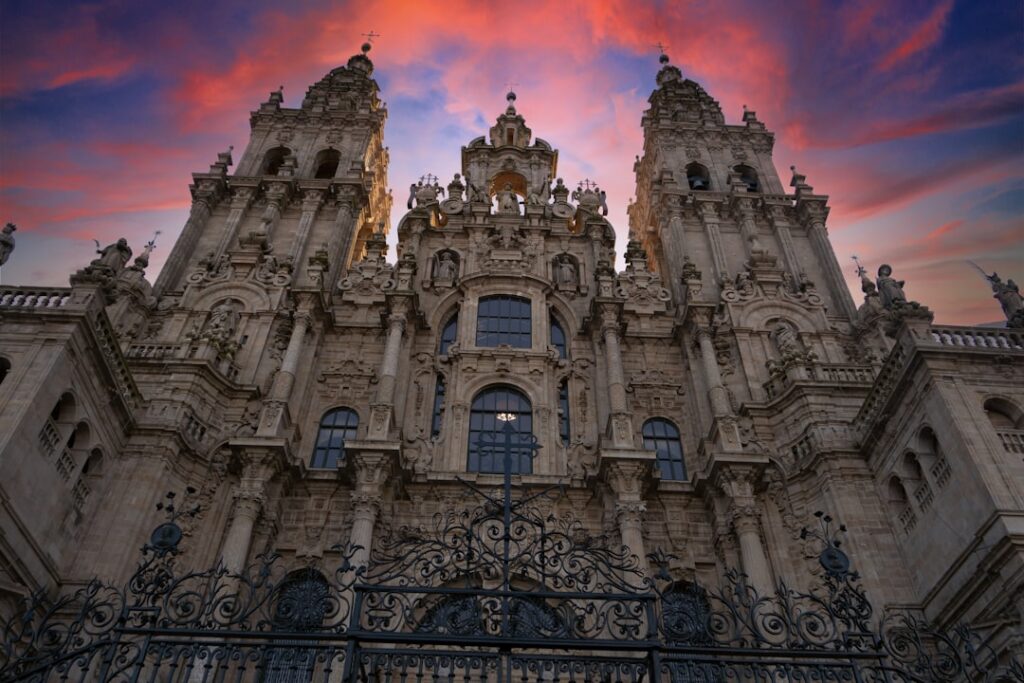
The cathedral sits in a UNESCO-listed historic centre. Its imposing Baroque façade on the Plaza del Obradoiro, the Pórtico de la Gloria (the sculpted portal by Maestro Mateo), the cloisters, the spire and the rooftops that define the old-town skyline provide a rich palette of subjects and emotions for photography. But a strong series also depends on preparation: knowing when to climb the cubierta (roof) for a panoramic view, what time to stake out the Alameda for sunset, where to frame a shot with a local market in the foreground, and how to handle interior light and crowds during services.
This guide gives you concrete strategies — for example, how to plan a sunrise visit to catch soft golden light on the Plaza del Obradoiro, how to schedule an architecture shoot during the blue hour to balance city lights and sky, and how to prepare your kit for interior shots (lenses, tripod, ISO, permissions if needed). You’ll also find accurate, checkable details: exact addresses (Praza do Obradoiro, s/n, 15705 Santiago de Compostela, A Coruña, Spain), useful offices (Oficina de Información e Atención ao Peregrino, Rúa do Vilar, 63, 15705 Santiago de Compostela), approximate prices for guided tours and special accesses, and typical opening hours (with the important note that these can change with the season or religious events).
Finally, you’ll get on-the-ground advice: how to interact respectfully with pilgrims and clergy, where to find unobstructed viewpoints, how to anticipate Galicia’s oceanic weather, and what alternatives to have if the sky is closed in. Image markers have been added throughout the text to inspire framing ideas and help you plan the visual side of your report. Charge your batteries and empty your memory cards: Santiago de Compostela Cathedral is waiting, and this guide will help you immortalize it at its best.
Understanding the Site: History, Areas Open to the Public and Photo Permissions
Before you press the shutter, it’s essential to know the layout of Santiago de Compostela Cathedral and which areas are open to visitors. The current cathedral is the result of several building phases: a 12th-century Romanesque core, Gothic additions, and a later Baroque façade (the Obradoiro façade). The most photographed elements include:
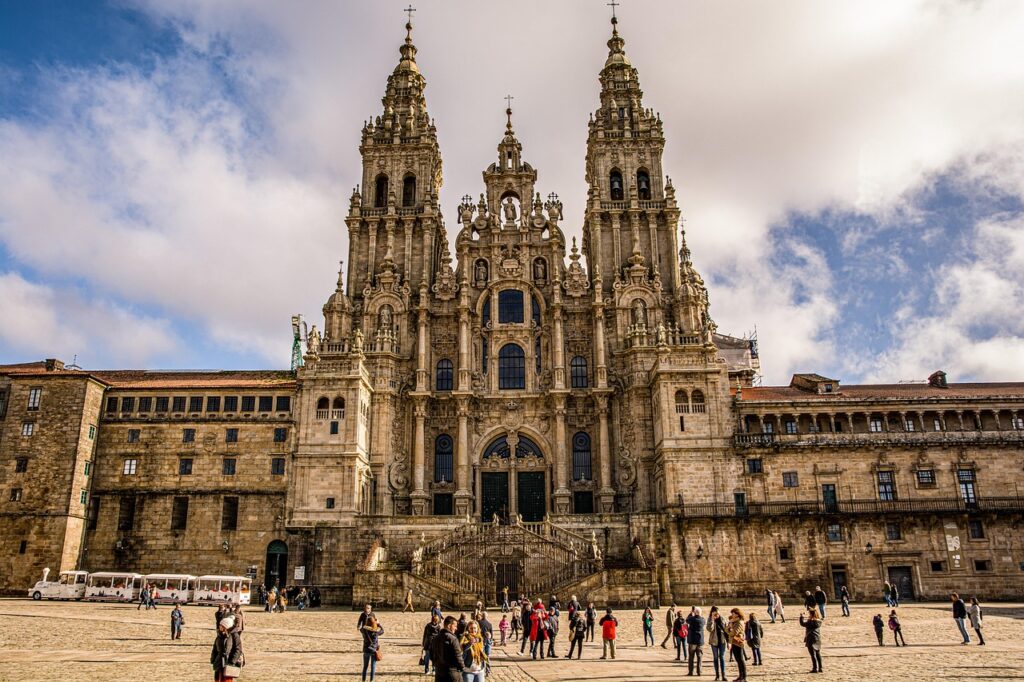
- Plaza del Obradoiro — the large esplanade in front of the Baroque façade, address: Praza do Obradoiro, s/n, 15705 Santiago de Compostela, A Coruña, Spain. This is the iconic spot for wide shots of the cathedral.
- Pórtico da Gloria — inside on the western side. It’s a major sculptural ensemble by Maestro Mateo (12th century). Access to the Pórtico de la Gloria can be restricted by opening times and may sometimes require a ticket for the Museo Catedralicio/Cubierta.
- Museo Catedralicio — Museu da Catedral, address: Praza da Quintana, 3, 15704 Santiago de Compostela. The museum displays liturgical objects and relics and often handles ticketing for special accesses. Indicative price: around €6.00 per adult, with reductions for students and seniors. Typical hours: 10:00–18:30 (subject to seasonal changes).
- Cubierta (cathedral roof) — one of the best vantage points for panoramas over the old town roofs. Access is via a guided visit (narrow staircase) and requires a ticket. Indicative price: around €12–13 (check the official site: https://catedraldesantiago.es). Hours: guided tours generally run from 10:00 to 18:00 depending on the season but may be limited in winter or for liturgical reasons.
- Cloisters and Chapels — the cloisters and side chapels offer architectural details and more intimate scenes; lighting varies and is excellent for portraits and detail shots.
Outdoor photography is allowed without permission, but be mindful of public space etiquette and the pilgrims. For indoor professional shoots (paid sessions, heavy equipment, tripods, lighting), a specific authorization from the cathedral administration may be required. For journalistic or tourist use, non-flash photography is generally tolerated. If you want to photograph religious services, you must get permission from the clergy.
Also note the Botafumeiro, the famous monumental thurible which is sometimes swung during certain ceremonies. Its swinging is spectacular but strictly regulated for safety and liturgical reasons: photographers must follow staff instructions. Public demonstrations usually take place during solemn masses (for example, the pilgrims’ mass). Check ahead with the Oficina de Información e Atención ao Peregrino (Rúa do Vilar, 63, 15705 Santiago de Compostela) for exact dates and times.
Best Times of Day and Seasons to Photograph the Cathedral
Light is the defining element in photography. In Santiago de Compostela, Galicia’s oceanic climate means changeable skies: misty mornings, frequent showers, but also long stretches of soft light. Here’s a daily schedule and seasonal plan to help you capture the cathedral at its most photogenic.
Sunrise (golden hour): From September to May, sunrise in Santiago often brings cool, golden light that sculpts the Baroque façade of the Plaza del Obradoiro. The cathedral’s stone warms, and long shadows add relief to the sculptures. Tip: arrive 30–45 minutes before sunrise to set up your composition and test settings (white balance on « daylight », aperture f/8–f/11 for sharpness, low ISO around 100–200).
Blue hour and night lighting: After dark, artificial lighting illuminates the façade, creating a strong contrast between warm street lamps and the deep blue sky. Use a tripod and long exposures (5–30 seconds depending on your composition and passing people) to get sharp images and smooth motion blur.
Midday: Light is harder and less flattering for wide architectural shots. However, it’s a good time to work on interior details (stained glass, sculptures) and daily life scenes (pilgrims, markets). Indoors, raise ISO carefully (400–1600) and use faster lenses (f/2.8, f/1.8) to shoot without flash.
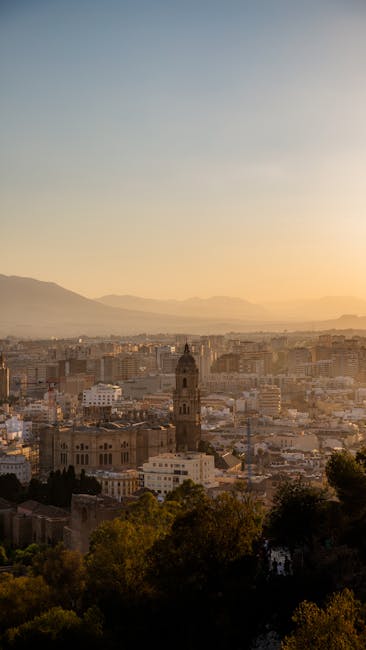
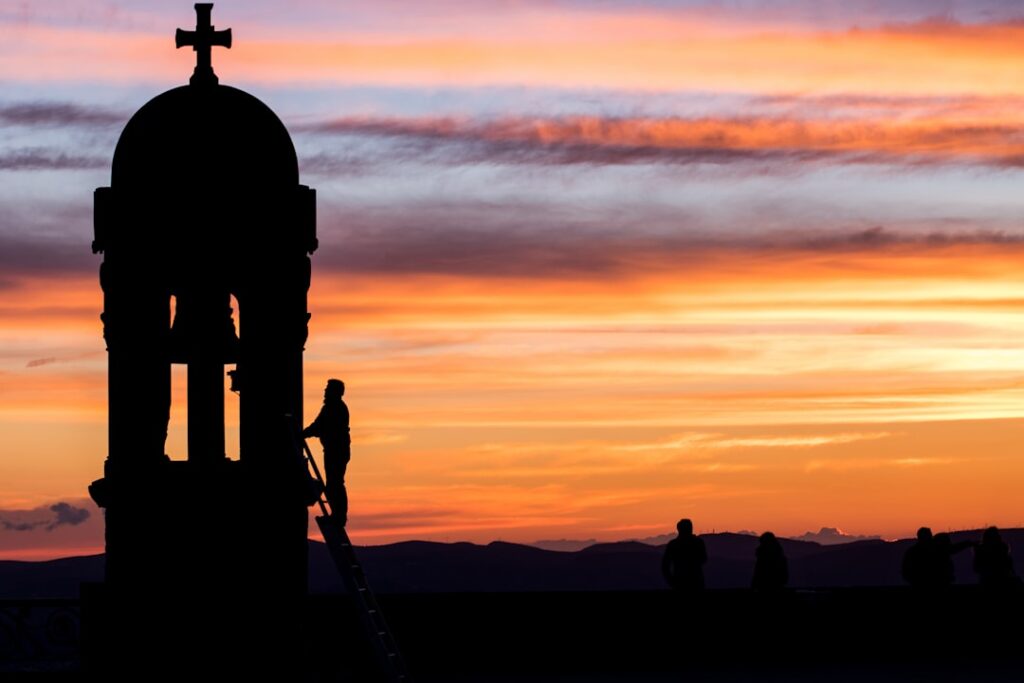
Late afternoon to sunset: The setting sun sometimes lights up Parque da Alameda and creates a dramatic backdrop for panoramas from the Alameda viewpoint. This is also a great window to capture the bell towers’ silhouettes with saturated colors. Alameda address: Alameda, 15705 Santiago de Compostela. If it’s overcast, switch to reflections, raindrops on stone and street scenes, which gain a dramatic, intimate mood.
Seasons: Spring (April–June) offers mild temperatures and longer days; autumn (September–November) is often very photogenic with changeable skies and golden light. Summer (July–August) brings bright light and large crowds of pilgrims, which makes empty shots harder but offers lively street scenes. Winter (December–February) delivers quieter atmospheres and sometimes dramatic skies, though special-access hours may be reduced.
Positions, Compositions and Techniques for Impactful Images
Picking the right angle often matters more than having the best lens. Here’s a list of viewpoints and techniques to help you build a coherent, professional series around the cathedral.
- Plaza del Obradoiro — wide frontal shot: This is the iconic image. Use a moderate wide-angle (24–35mm on full-frame) to include the square and surrounding buildings (Hostal dos Reis Católicos, Pazo de Raxoi). Technique: symmetrical framing, level horizon, aperture f/8–f/11. Tip: include a human element in the foreground (a pilgrim, a guide) to give a sense of scale.
- Mirador de la Alameda — backlight or silhouette: From the Alameda the cathedral stands out against the skyline. Recommended framing: a telephoto (70–200mm) to compress the scene and isolate the spires. Ideal at sunset to get silhouettes.
- Rooftop/Cubierta — rooftop panorama: A roof visit gives an exceptional perspective on slate roofs and nearby bell towers. Use a standard lens (35–50mm) to capture depth and an 85mm for cityscape details. Watch for openings and obstacles (chimneys, railings).
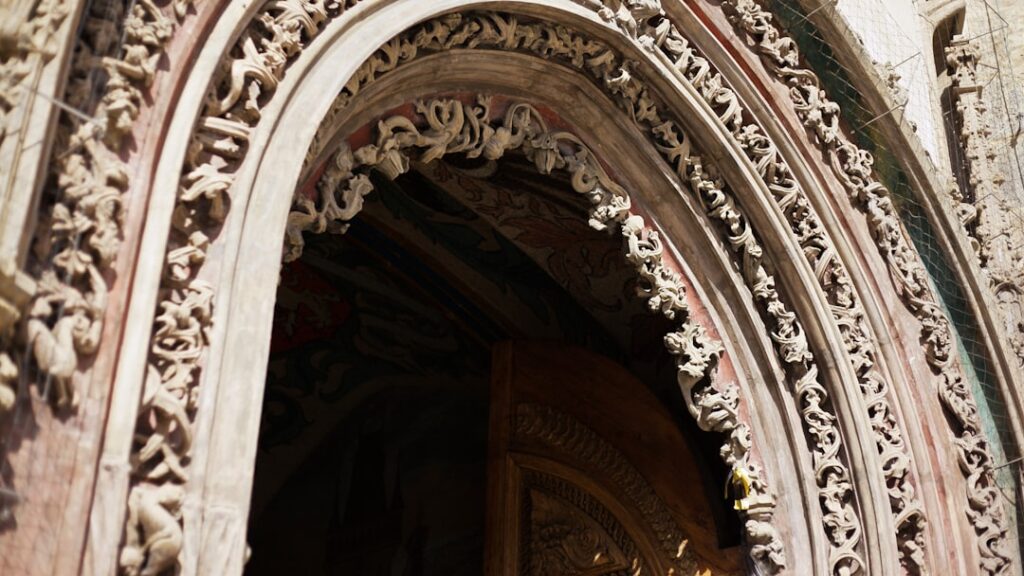
- Pórtico da Gloria — sculptural detail: Work in portrait orientation or with a short tele (50–105mm) to isolate faces and textures of the sculptures. Soft light is best: visit when crowds are smaller. Respect site rules (no flash, no tripod if forbidden).
- Interiors and liturgical atmosphere: To capture mood (candles, volumes, the Botafumeiro haze), increase ISO (800–3200 depending on your camera), open up to f/1.8–f/2.8 if possible, and use fast lenses. Stabilize when light is low and consider lenses with optical stabilization.
- Street life around Mercado de Abastos: Address: Mercado de Abastos de Santiago, Rúa das Ameas, 27, 15704 Santiago de Compostela. This market is perfect for colourful close-ups and contextual shots (fish, Galician produce). Combine wide shots and details (product + cathedral in the background if you can).
Additional technical considerations:
- Depth of field: for architecture, favour f/8–f/11; for portraits of pilgrims, f/1.8–f/4 depending on the desired look.
- White balance: outdoors, use « daylight » or « cloudy » depending on the weather; indoors, try auto then correct in post to remove colour casts.
- ND filter: useful for exposing clouds or getting smooth motion on long exposures in the square.
- Polariser: can reduce reflections on stained glass and deepen the sky; watch for side effects on wide-angle lenses.

Practical Matters: Access, Tickets, Opening Hours, Transport and Local Tips
To pull off a successful session you need to combine logistics and rules. The information below was accurate at the time of writing — always check official sites for updates.
Useful addresses:
- Catedral de Santiago de Compostela — Praza do Obradoiro, s/n, 15705 Santiago de Compostela, A Coruña, Spain.
- Museo Catedralicio — Praza da Quintana, 3, 15704 Santiago de Compostela.
- Oficina de Información e Atención ao Peregrino — Rúa do Vilar, 63, 15705 Santiago de Compostela. Tel. +34 981 56 05 11 (hours variable).
- Santiago de Compostela Train Station — Praza da Estación, 2, 15702 Santiago de Compostela.
- Santiago de Compostela Bus Station — Rúa de Barcelona, 2, 15701 Santiago de Compostela.
Indicative opening times and fees:
- Outdoor free visit — accessible 24/7 on the Plaza del Obradoiro. Exterior photography without permission: free.
- Interior access to the cathedral — typical hours: 07:00–20:30 (may vary with seasons and services). General entry: often free, but some areas may require a ticket.
- Museo Catedralicio — indicative fee: around €6.00 (full price), with discounts available. Hours: roughly 10:00–18:30 (seasonal).
- Cubierta (roof) visit — indicative fee: €12–13. Booking recommended via the official site: https://catedraldesantiago.es. Hours often limited and guided tours usually mandatory.
- Botafumeiro — demonstrations occur during solemn masses (e.g. pilgrims’ mass at 12:00 on certain days). Check the liturgical calendar; visitor participation is often free but limited.
Local practical tips:
- Arrive early for sunrise: park or arrive at the Train Station (Praza da Estación, 2) and walk 15–20 minutes to the cathedral.
- If you plan to use a tripod for night work, contact the cathedral administration if you’ll be using professional equipment. For amateur use, tripods are usually tolerated outside but may be restricted during events.
- Contact the Oficina de Información e Atención ao Peregrino (Rúa do Vilar, 63) for details on special events (processions, masses, special roof openings).
- Bring waterproof clothing and closed shoes — weather changes fast and the cobbles can be slippery.
- Respect religious rules and pilgrims’ privacy: avoid using flash during services and keep a respectful distance during ceremonies.
Conclusion: Summary of Best Practices and Final Prep
Photographing Santiago de Compostela Cathedral requires technical, logistical and cultural preparation. The best moment depends on what you want: the iconic photo of a golden, empty Plaza del Obradoiro? Prioritise sunrise in the off-season. Seeking the sacred interior atmosphere with the Botafumeiro in motion? Check the liturgical calendar and be there for a solemn mass. Want a unique panorama of the old-town roofs? Book the Cubierta and plan to carry light gear for the climb.
Practical recap: memorise the key addresses (Cathedral, Praza do Obradoiro, Museu da Catedral, Praza da Quintana, Oficina do Peregrino, Rúa do Vilar, 63); verify opening hours and fees (Museum ≈ €6.00, Cubierta ≈ €12–13); adapt your kit (wide-angle, tele, fast lens, tripod for blue hour); respect interior rules (no flash, permissions required for professional use); and stay mindful of local weather, which strongly shapes the mood of your images.
Finally, don’t neglect the human approach: a shot of a pilgrim in prayer, a vendor at Mercado de Abastos, or a local guide telling the cathedral’s story can add powerful narrative to your series. Talk to people, ask permission for close portraits, and be ready to capture the moment. Santiago de Compostela Cathedral is more than an architectural subject: it’s a living place full of emotion, where light and movement create stories that only a prepared photographer can tell with sensitivity.
Safe photographic travels — and remember: beyond technique, it’s respect for the place and its people that will give your images depth and emotional power.