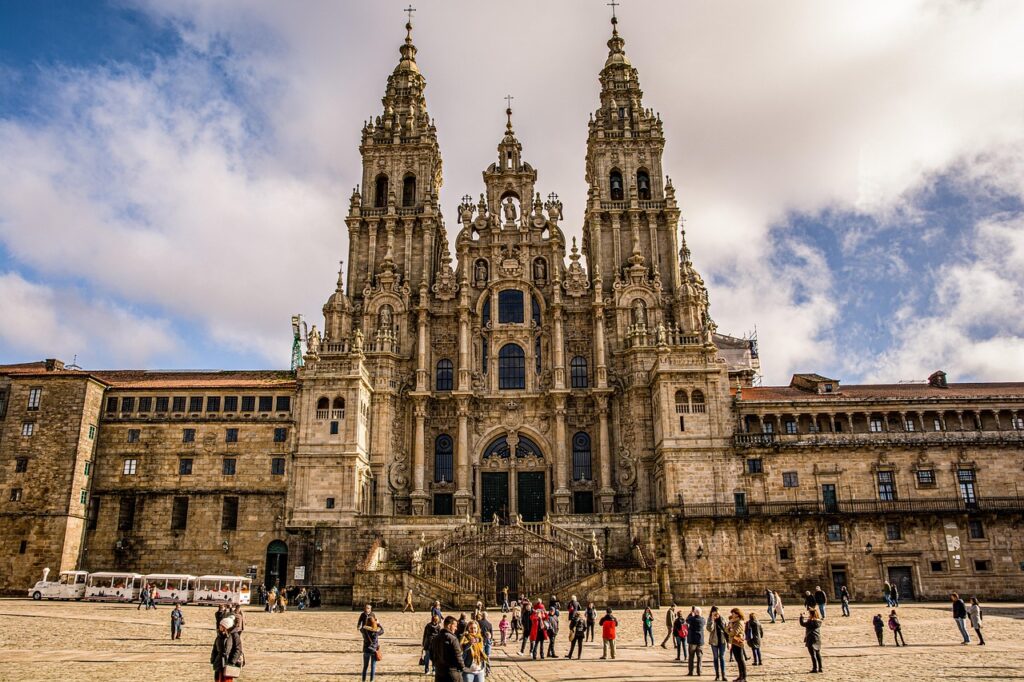






Introduction — Why these 5 neighborhoods around Santiago de Compostela Cathedral matter
Santiago de Compostela is, for many, synonymous with the Santiago de Compostela Cathedral and the Camino de Santiago. Yet the city’s richness goes far beyond its main monument: clustered around the cathedral are distinct neighborhoods that together tell the full story of Galicia’s history, cuisine, architecture and everyday life. This guide focuses on the five districts encircling the cathedral that, taken together, give visitors a practical and immersive feel for the city: the Casco Histórico (historic center), the Praterías and Quintana areas, the foodie street Rúa do Franco and the Mercado de Abastos, the Alameda with its sweeping views, and finally the university and monastic quarter to the northeast.
This isn’t merely a list of sights — it’s a smart itinerary with exact addresses, opening hours, prices in euros, local tips and sensory descriptions. You’ll find practical info on the Santiago de Compostela Cathedral (Praza do Obradoiro, s/n, 15705 Santiago de Compostela, A Coruña, Spain), on the famous Parador (Hostal dos Reis Católicos), on the plazas where pilgrims and locals meet, on cafés and taverns not to miss, and on museums and monasteries you can reach on foot from the cathedral.
The guide is aimed at a broad audience: pilgrims arriving after long days on the trail, travelers seeking authenticity, food lovers, baroque architecture fans and short-stay visitors. Each neighborhood is described in both practical terms (hours, prices, addresses) and sensory terms (atmospheres, sounds, smells), with tips to optimize your time, avoid crowds, and capture the best photo moments.
1. Casco Histórico (Historic Center) — The medieval heart around the Cathedral
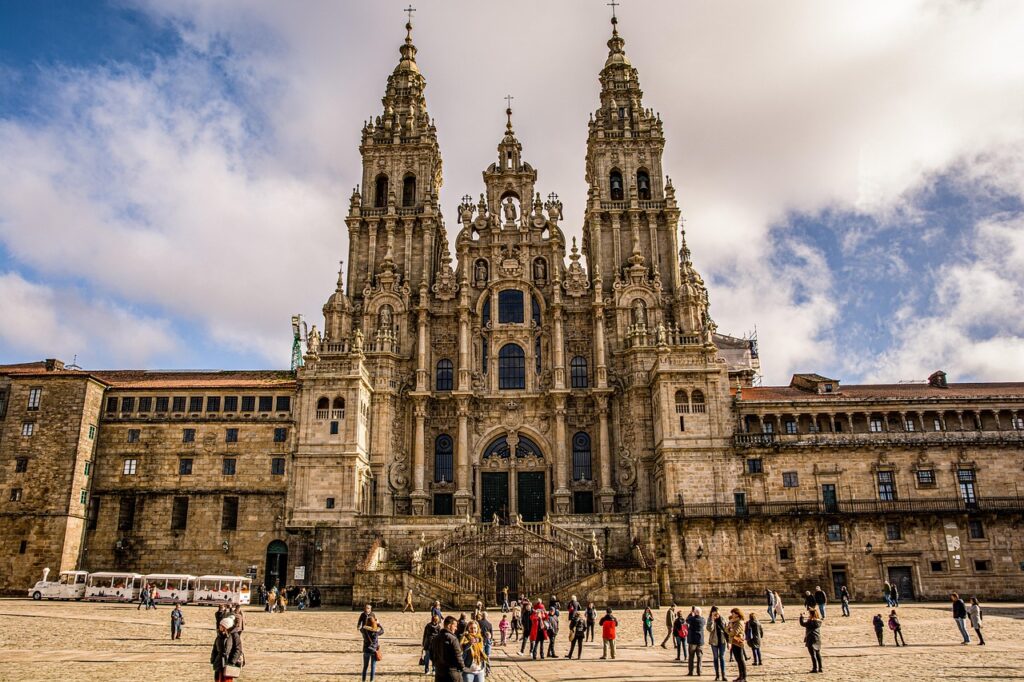
The Casco Histórico is the soul of Santiago de Compostela: cobbled lanes, baroque façades and tiny intimate plazas. The area immediately centers on the Praza do Obradoiro, right in front of the cathedral (Praza do Obradoiro, s/n, 15705 Santiago de Compostela). Here you’ll find several landmark buildings: the Hostal dos Reis Católicos (Praza do Obradoiro, 1, 15705 Santiago de Compostela), now a national parador open daily; and the Palacio de Raxoi (Praza do Obradoiro, s/n), home to local authorities. The atmosphere shifts through the day: early morning you’ll hear the footsteps of the last pilgrims; at midday the square buzzes around the Pilgrim’s Mass; in the evening the lighting highlights the baroque carvings.
Practical visits: entry to the Santiago de Compostela Cathedral is generally free for the basilica during daytime, but some areas are ticketed — for example, access to the rooftop (visita á cubertas) usually costs about 8.00 € (indicative fare) and often requires reservations in high season. The Pilgrim’s Mass is held every day at 12:00 and is highly recommended; use of the Botafumeiro (the giant thurible) is occasional and depends on the liturgical calendar, sometimes linked to a participation fee or donation.
- Main address: Praza do Obradoiro, s/n, 15705 Santiago de Compostela, A Coruña, Spain.
- Cathedral hours: generally 07:00–20:30 (varies by season). Check on site or on the official website.
- Prices: cathedral access free; rooftop visit ~8.00 €; museums and treasury may charge separately (4–10 €).
Local tips: arrive early to avoid tour groups, stand on the Praza das Praterías side of the forecourt for the best views of the sculptures, and avoid 12:00–14:00 if you want photos without crowds. For a deeper experience, try to visit the sacristy of the treasury if it’s open (often ticketed) and purchase a Compostela certificate at the pilgrims’ office near the cathedral.
2. Praterías and Praza da Quintana — Sculptures, stone steps and places for quiet reflection
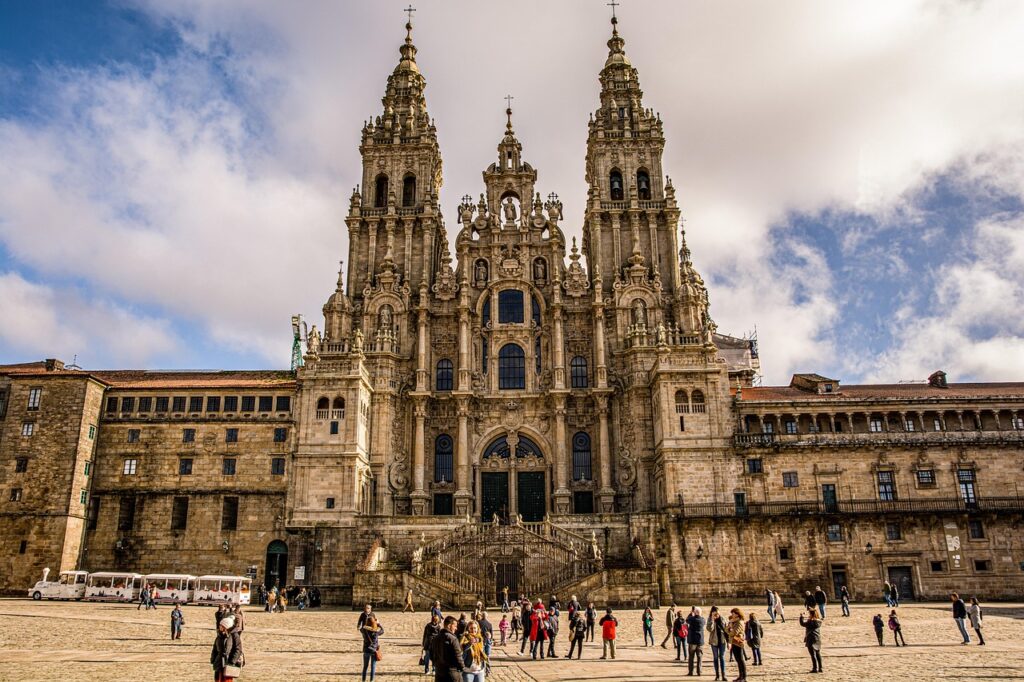
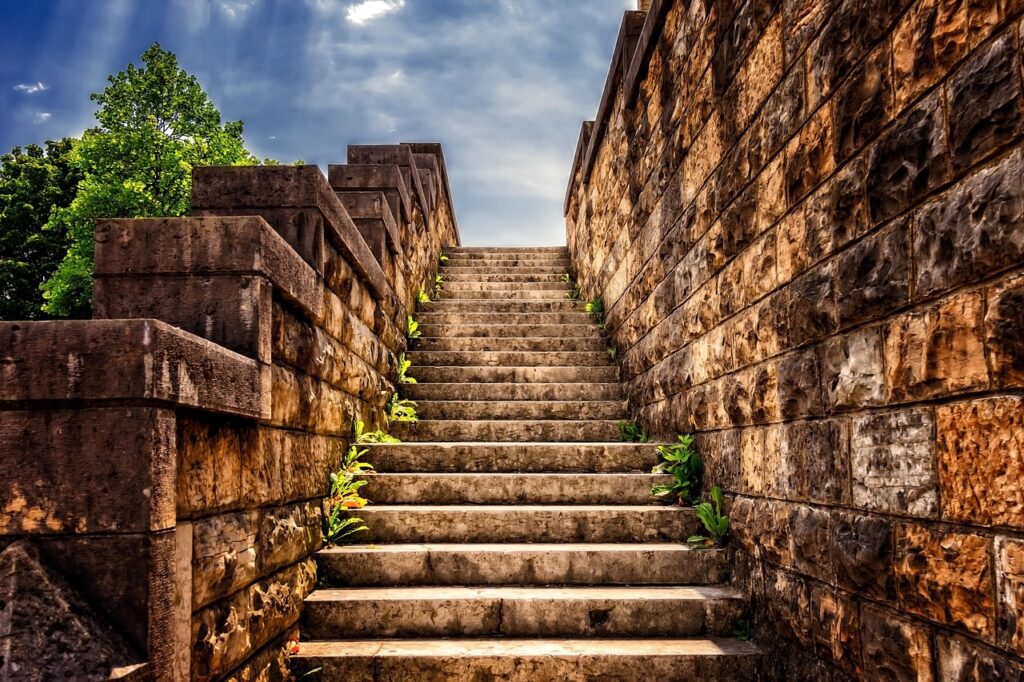
Immediately east and northeast of the cathedral are the Praterías and the Praza da Quintana, two areas made for slow wandering. The Rúa das Praterías (Rúa das Praterías, s/n) runs alongside the cathedral and is lined with religious shops, galleries and vantage points. The Praza da Quintana actually has two levels: the Quintana dos Mortos (lower) and the Quintana dos Vivos (upper). These stone terraces and stairways create pockets of shade and very photogenic spots.
Main highlights:
- Rúa das Praterías: pilgrimage goods shops and small cafés. Typical address: Rúa das Praterías, 15705 Santiago de Compostela.
- Praza da Quintana: the monumental stairway north of the cathedral — perfect to sit and watch processions.
- Iglesia de San Xoán de Portomarín: small chapels and religious corners visible in the immediate area.
Hours and prices: these public spaces are open 24/7. Shops around them have variable hours, often 10:00–20:00 with closures between 14:00–17:00 off season. Small tea houses and bookstores sell Camino guides and books priced between 5.00 € and 30.00 €.
Atmosphere and tips: in the morning the Quintana is a meeting point for pilgrims grabbing a quick coffee before setting off. In the afternoon students and locals come here to read or chat. For photos, the soft evening light on the Quintana steps is exceptional. If you’re after silence and reflection, head to the upper section after 18:00 once most guided tours have dispersed.
3. Rúa do Franco and Mercado de Abastos — Food culture and everyday life
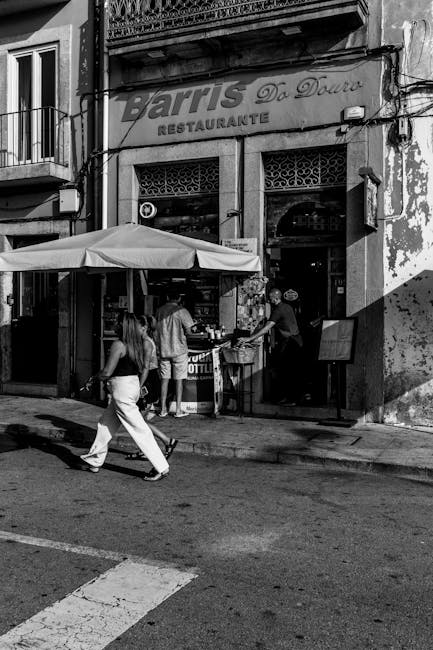
The third area around the cathedral brings together gastronomy and daily commerce: Rúa do Franco and the Mercado de Abastos de Santiago. Rúa do Franco (Rúa do Franco, 15705 Santiago de Compostela) is the city’s best-known street for tapas bars and restaurants, concentrated with places famed for seafood and Galician cuisine. A short walk away, the Mercado de Abastos (Praza de Abastos, s/n, 15704 Santiago de Compostela) is the city’s second-most visited site after the cathedral: a lively market of local producers, fishmongers, vegetable stalls and cheese vendors.
Addresses and hours:
- Rúa do Franco: central pedestrian street; bars typically open 12:00–16:00 and 20:00–24:00.
- Mercado de Abastos de Santiago: Praza de Abastos, s/n, 15704 Santiago de Compostela. Typical hours: 08:00–15:00 (Tuesday to Saturday), closed Sunday morning and Monday (varies); check locally.
Indicative prices: a tapas meal on Rúa do Franco usually ranges from 12.00 € to 30.00 € per person depending on the venue; a seafood main course can cost 18.00–35.00 €. At the Mercado de Abastos, a takeaway seafood platter may cost 10.00–25.00 €, local vegetables 2.00–5.00 € per kilo, artisanal cheeses 12.00–25.00 € per kilo.
Immersive experience: arrive at the mercado early to watch fishermen unload their catch — the salty smell, the bright colors of sea bream and octopus, and the vendors’ calls make for a vivid scene. Try pulpo a la gallega (Galician-style octopus) in one of the little tavernas around the market: typically served on a wooden plank with paprika, olive oil and potato, priced around 10.00–14.00 €. Practical tips: go to Rúa do Franco in the afternoon to avoid the peak lunch rush; book popular restaurants on weekends.
4. The Alameda — Panoramic gardens and museums west of the Cathedral
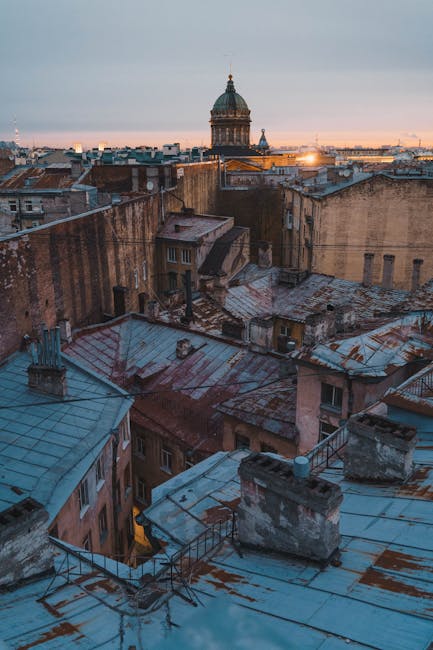
Just west of the historic center, the Alameda park (Parque da Alameda, Rúa da Granxa de San Xoán area) is one of the best vantage points for views over the cathedral and its rooftops. It’s a favorite spot for locals, students and families. Tree-lined paths, benches and viewpoints make it a peaceful place to rest after walking around the city.
Points of interest and addresses:
- Parque da Alameda: access from Rúa do Franco or the Plaza de la Universidade; open for strolling 24/7 though some areas may be dark at night.
- Museo do Pobo Galego (Galician People’s Museum): Rúa San Domingos de Bonaval, s/n, 15703 Santiago de Compostela. Indicative hours: 10:00–20:00 (varies). Entry fee: around 3.00–5.00 €.
- Convento de San Domingos de Bonaval: adjacent convent and religious spaces, often hosting temporary exhibitions.
Hours and prices: the Alameda is free. The Museo do Pobo Galego offers reduced rates for students and seniors and sometimes free entry days; allow 1–2 hours for a visit. Many cafés around the Alameda serve Galician pastries priced 2.50–5.00 €.
Experience and tips: walk up to the upper promenade of the Alameda at sunset for a postcard view of the cathedral. The park also has quieter paths that reveal Santiago’s civic architecture and hanging gardens. If you enjoy craft markets, look for local artisan stalls that pop up on weekends. Photographers will appreciate the lines of trees and the perspective toward the Plaza de la Universidade.
5. University and monastic quarter to the northeast — Convents, libraries and student life
Northeast of the cathedral, the university quarter mixes academic buildings, historic monasteries and small bookshops. The presence of the University of Santiago de Compostela (historic campus around Rúa do Vilar and Praza do Obradoiro) gives the area a buzz of student cafés, specialist bookstores and concert venues.
Addresses and places to visit:
- Biblioteca da Universidade de Santiago: check opening hours on the university website; access is regulated according to rules.
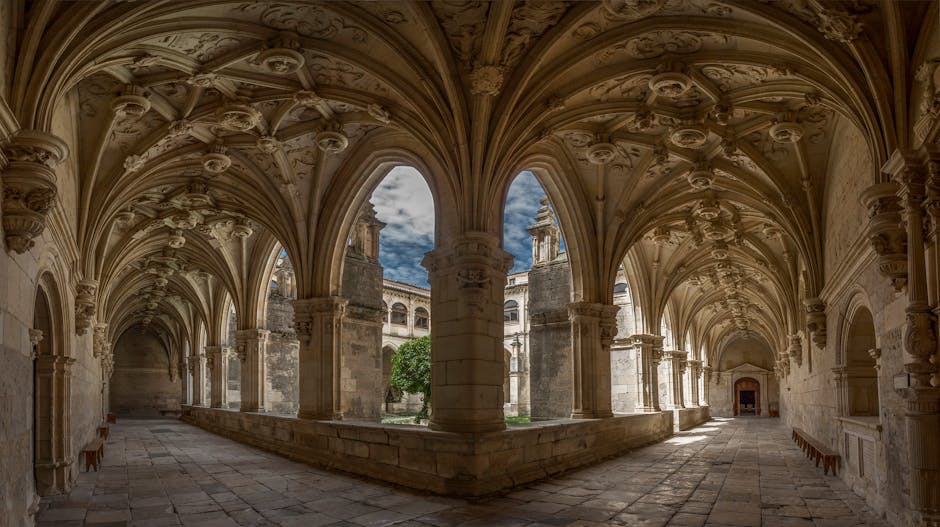
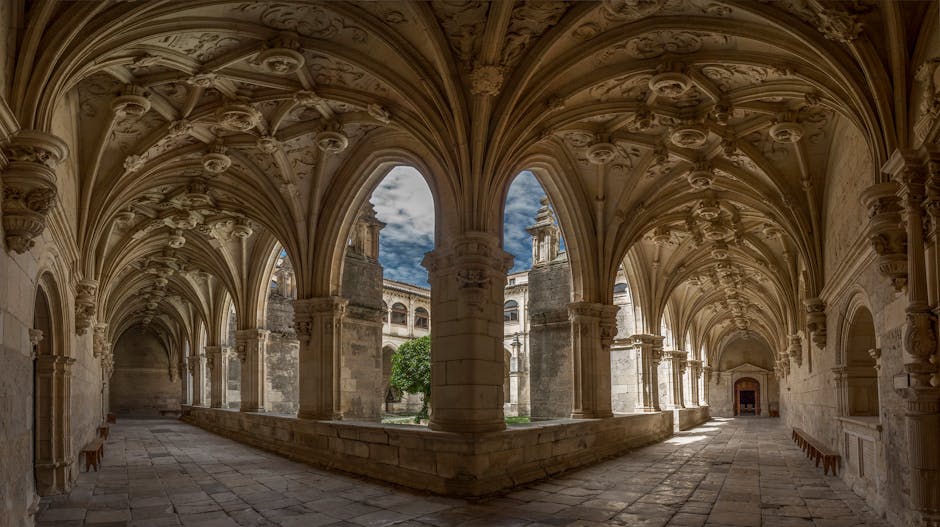
- Mosteiro de San Paio de Antealtares: Praza de San Paio de Antealtares, s/n, 15705 Santiago de Compostela. This monastery adjacent to the cathedral offers contemplative architecture.
- Rúa do Vilar: historic street with bookstores and small shops (Rúa do Vilar, 15705 Santiago de Compostela).
Hours/prices: most religious sites welcome visitors in the morning and afternoon; some convents ask for a small donation of 1.00–3.00 € for upkeep. Student cafés offer budget-friendly options: coffee from 1.00–1.50 €, bocadillos (sandwiches) around 3.00–6.00 €.
Atmosphere and tips: the vibe here is more relaxed than in the tourist core — it’s the best place to find rare editions, catch a chamber concert or meet local students. Wander the small plazas to discover façades with azulejos, concert posters and second-hand vinyl stalls. For a break, drop into a university café and, if offered during events, try a queimada (a traditional flaming drink); otherwise, opt for Galician pastries at a neighborhood bakery.
Conclusion — How to make the most of these five neighborhoods around the Cathedral
These five neighborhoods around the Santiago de Compostela Cathedral together form a microcosm of the city: spirituality, history, food, art and academic life. To get the most out of your visit, plan at least two days: one devoted to the Casco Histórico, Praterías and Quintana for the main heritage and religious sites; another for discovering the flavors (Rúa do Franco, Mercado de Abastos), relaxing in the Alameda and exploring the quieter corners of the university quarter.
Wear comfortable shoes — the streets are cobbled and can be slippery. Carry small change for donations in churches, purchases at the market or local guides. Book popular restaurants, especially in high season, and check museum and guided tour hours — many close in the afternoon in low season. Above all, respect spaces of worship and pilgrims: this is still a living pilgrimage site, and the balance between tourism and devotion calls for courtesy and attentiveness.
Follow this guide and you’ll not only have a practical map of the five essential neighborhoods around the cathedral, but also a palette of experiences — from the silence of cloisters to the bustle of the Mercado de Abastos, from the Alameda panoramas to the solemn steps of the Quintana. Santiago de Compostela reveals itself in layers: take the time to listen, taste and look to truly catch its rhythm. Safe travels and buena ruta!